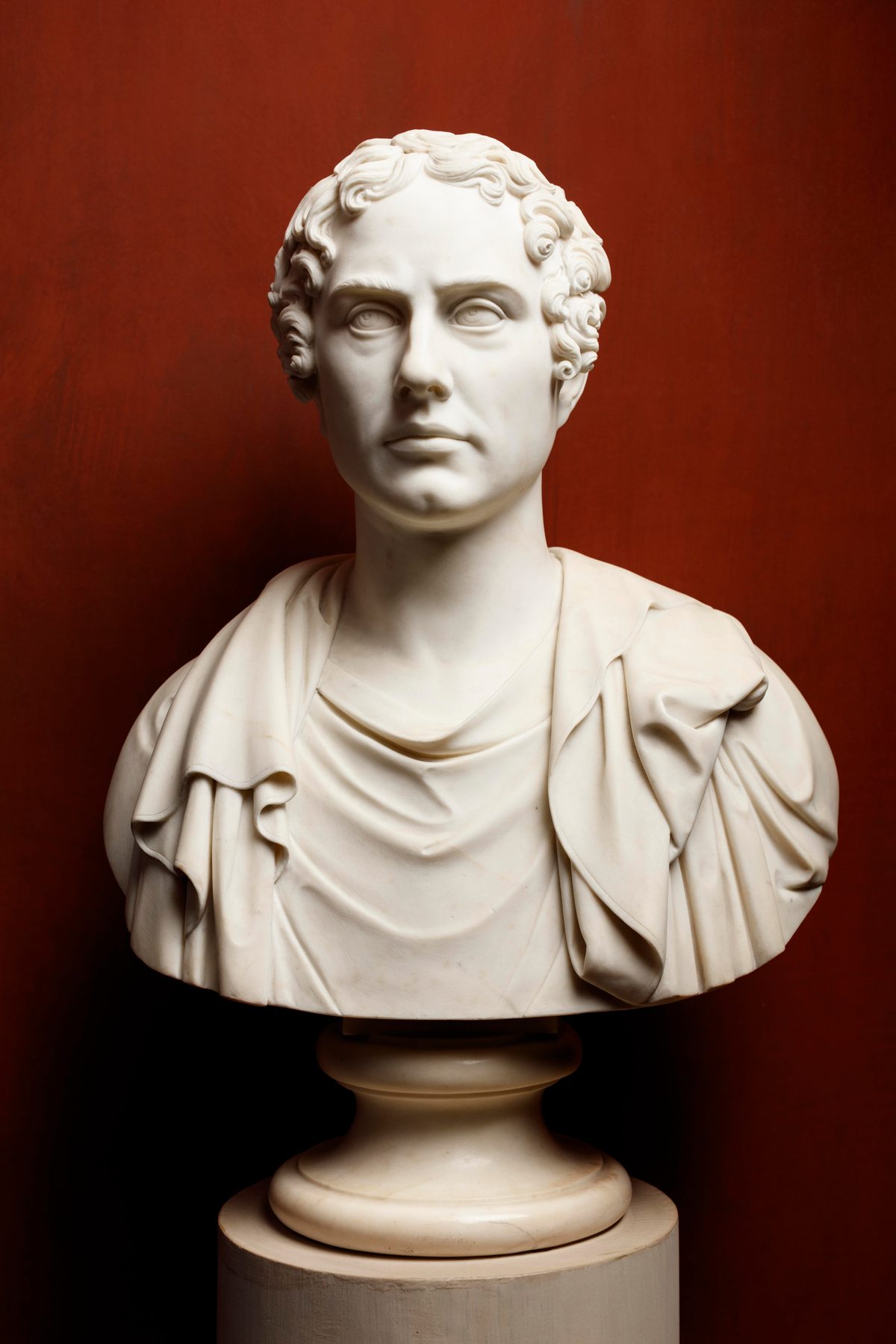
Bertel Thorvaldsen’s bust of Byron. ‘It is no good,’ he said; ‘I am far more unhappy than that.’
The mal du siècle, the sickness of the century, was a sickness of the last century. Today we no longer even understand this sickness, so far off has the last century become. Nothing is so out of date as what happened yesterday: Greek antiquity is not old-fashioned; our grandfathers’ day is.
Hungarian source
A "mal du siècle", a század betegsége, a mult század betegsége volt. Ma már meg sem
értjük ezt a betegséget, a mult század olyan messze van. Semmi sem olyan elavult, mint
ami tegnap történt; a görög ókor nem régimódi, nagyapáink ideje az.
The ‘sickness of the century’ was also called ‘world-sorrow’. World-sorrow is sorrow on account of the world: sorrow that the world is as it is and not as the poets dreamed it; that life is a chain of small and grey realities, and is not made up solely of noble and exalted feelings.
Hungarian source
A "század betegségét" "világfájdalomnak" is nevezték. A világfájdalom fájdalom a világ
miatt; fájdalom, hogy a világ olyan, mint amilyen és nem olyan, mint ahogy a költők
megálmodták. Hogy az élet apró és szürke valóságnak láncolata, nem áll csak nemes és
magasztos érzelmekből.
The protagonist and very pattern of the age of world-sorrow was Lord Byron, the great English poet. For decades upon decades people lived under Byron’s spell: at the beginning of the century Count István Széchenyi opened his diary with quotations from Byron, and in its latter half Queen Elisabeth was still copying Byron’s verses into her own. To Byron’s cradle, says Macaulay, every fairy had been invited, save one. And indeed the fairies came; one bestowed on him nobility, another genius, a third beauty. But the wicked fairy, who had not been invited, came last, and, since she was too late to reverse what her sisters had done for their favourite, she mixed some curse into every blessing. Byron sprang from an old and noble family, but the family, through crimes and follies, had fallen into decline… he had great abilities, but there was something sickly in his mind… he had such a head that sculptors delighted to carve it in marble, but a foot as lame as a street-corner beggar’s…
Hungarian source
A világfájdalom korának főszereplője és mintaképe Lord Byron, a nagy angol költő. Az
emberek sok-sok évtizeden át éltek Byron bűvöletében: Széchenyi István gróf a század
elején Byron-idézetekkel kezdi naplóját és Erzsébet királyné a század második felében
még mindíg Byron-verseket ír naplójába. Byron bölcsőjéhez, mondja Macaulay, minden
tündért meghívtak, egyet kivéve. A tündérek el is jöttek; az egyik nemességet
ajándékozott neki, a másik lángelmét, a harmadik szépséget. A gonosz tündér, akit nem
hívtak meg, utoljára érkezett és minthogy már nem tudta megsemmisíteni azt, amit nővérei
kedvencükért tettek, hát minden áldásba valami átkot kevert bele. Byron régi és előkelő
családból származott, de a család vétkek és balgaságok következtében lehanyatlott...
nagy képességekkel rendelkezett, de valami beteges volt szellemében... olyan feje volt,
hogy a szobrászok kedvvel faragták márványba, de olyan sánta lába, mint az utcasarki
koldusnak...
But the chief trouble, the sickness of the century, sat in Byron’s own soul. His life was played out upon the summits of mankind. It is a life like some magnificent film: he is feted and hounded, attended at every step by loves and scandals, at once and in one person the world-weary man of fashion and the magnificent hero of liberty; ladies faint when he enters the room unawares; a girl, ten years after Byron’s death, falls so in love with him that she takes her own life for his sake. He had everything that life can give: brilliance, riches, a literary success such as has fallen to scarcely anyone besides him, and a success with women no less; self-sacrificing friends and women surrounded him, and he was able to dedicate both his fortune and his life to the service of a great cause — and yet he was unhappy.
Hungarian source
De a főbaj a század betegsége, Byron lelkében ült. Élete az emberiség ormain játszódott
le. Olyan ez az élet mint egy nagyszerű film; ünneplik és üldözik, szerelmek és
botrányok kísérik minden lépését, életúnt világfi és nagyszerű szabadsághős egyszerre és
egyszemélyben, hölgyek elájulnak, amikor váratlanul belép a terembe, egy leány tíz évvel
Byron halála után annyira beleszeret, hogy öngyilkos lesz miatta. Mindent megkapott,
amit az élet adhat; fényt, gazdagságot, olyan írói sikert, amilyen alig jutott ki rajta
kívül másnak, és olyan férfisikert is, önfeláldozó barátok és asszonyok vették körül és
egy nagy eszme szolgálatába állíthatta vagyonát és életét - és mégis boldogtalan volt.
Consciously unhappy and proud of it. When, in Rome, he called upon Thorvaldsen, the world-famous sculptor, to have his likeness made, Thorvaldsen was surprised to see Byron seat himself before him in some quite peculiar, dramatic pose. He asked him merely to be as he usually was. ‘But this is how I am!’ cried Byron, affronted. And when the bust was finished, it did not please him. ‘It is no good,’ he said; ‘I am far more unhappy than that.’
Hungarian source
Tudatosan és önérzetesen boldogtalan. Mikor Rómában felkereste Thorwaldsent, a világhírű
szobrászt, hogy szobrot készíttessen magáról, Thorwaldsen meglepve látta, hogy Byron
valami egészen különös, drámai pózban ül le eléje. Kérte, hogy legyen csak olyan,
amilyen máskor szokott lenni. "De én ilyen vagyok!" - kiáltotta Byron felháborodva. És
mikor a szobor elkészült, nem tetszett neki. "Nem jó, - mondta, - én sokkal
boldogtalanabb vagyok."
And how many followed him into that willed, carefully guarded sorrow! Men would enter company with a dark expression, conspicuously concealing their secret grief. Ladies ate vinegared salad and chalk to make themselves pale, or ate nothing at all. In this too it was Byron who bewitched the age. For Byron was inclined to stoutness, yet, as an Englishman and a man of fashion, he was sorely anxious for his figure. From time to time he kept a strict diet, taking little but biscuit and mineral water — though it is true that after a while he would weary of it and make up the arrears with measureless eating and drinking. This forced and irregular slimming undermined his nerves, heightened his irritability, and became, as it were, the bodily ground of his world-sorrow. By degrees he came to regard eating, taken altogether, as a thing contemptible and unworthy; he was disenchanted with a marchesa because she despatched a veal cutlet with a hearty appetite, while his greatest love, Countess Teresa Guiccioli, is said to have eaten nothing at all. Under Byron’s influence eating then went out of fashion among the more refined souls — not because they feared growing fat, as our lady contemporaries do, but because appetite could not be reconciled with world-sorrow.
Hungarian source
És hányan követték ebbe az akart, gondosan őrzött szomorúságba! A férfiak sötét
arckifejezéssel léptek be a társaságba, titkos bánatukat feltünően titkolva. A hölgyek
ecetes salátát és krétát ettek, hogy sápadtak legyenek, vagy nem ettek semmit. Ebben is
Byron babonázta meg a kort. Byron ugyanis hízásra hajlott, de mint angol és mint
világfi, nagyon féltette vonalait. Időnkint szigorú diétát tartott, alig vett magához
mást, mint kétszersültet és ásványvizet; igaz, hogy egy idő múlva megúnta és mérhetetlen
evéssel-ivással kárpótolta magát. Ez az erőltetett és rendszertelen fogyókúra aláásta
idegeit, megnövelte ingerlékenységét s mintegy testi alapjává lett világfájdalmának.
Lassankint az evést egészben véve megvetendő és méltatlan dolognak tartotta; egy
marchesából kiábrándult, mert nagy étvággyal fogyasztott el egy borjúkotlettet és legfőbb
szerelme, Guiccioli Theresa grófnő, azt mondják, egyáltalán nem evett. Byron hatása alatt
azután az evés kiment a divatból az előkelőbb lelkek között; nem azért nem ettek, mert az
elhízástól féltek, mint kortársnőink, hanem azért, mert az étvágy nem volt
összeegyeztethető a világfájdalommal.
Our century is in every respect more unfortunate than the peacefully developing, prosperous and mild, bourgeoisly self-assured and honest last century. But in this one thing it is the more fortunate: that it has been cured of the ‘sickness of the century’. After the pale, fragile dreamers of the last century, and its sloping-shouldered young ladies forever faint with the headache, there came into fashion the sporting, sun-tanned women and men of today. Sorrow is no longer a glory; on the contrary, good cheer is now obligatory — keep smiling — and whoever is in trouble today honestly strives to hide it from his fellow men, lest they make his plight worse still with their contemptuous pity.
Hungarian source
A mi századunk minden tekintetben szerencsétlenebb a békésen fejlődő, jómódú és szelíd,
polgárian magabiztos és becsületes mult századnál. De abban az egyben szerencsésebb, hogy
kigyógyult a "század betegségéből". A mult század sápadt, törékeny álmodozói és csapott
vállú fejfájós, ájulós kisasszonyai után a sportos, napbarnította nők és férfiak jöttek
divatba. A bánat ma már nem dicsőség, ellenkezőleg, a jókedv kötelező, a keep smiling, és
akinek ma baja van, őszintén igyekszik eltitkolni embertársai elől, nehogy lenéző
sajnálkozással még inkább rosszabbítsák helyzetét.
And it is a strange thing, but so it is: the good fortune that the ‘sickness of the century’ has passed we owe to our living in such an unfortunate and restless age. In the peaceful, happy nineteenth century people had ample leisure to occupy themselves with their souls — and the soul, left to itself, is generally sad. Sad, because it is soul in a world of matter; and sad, because it is left to itself. But who, in our own day, can afford the luxury of living for his soul? These burdened times lay claim to all our strength. Day after day and hour by hour we must do battle anew with the seven-headed dragon of reality, for ourselves, for our own, for our country. We feel only the immediate pains, and have no leisure to divine those great, supra-personal sorrows, as Byron and his age did. And that is a great good fortune within our misfortune.
Hungarian source
És különös, de így van: azt a szerencsét, hogy a "század betegsége" elmúlt, annak
köszönhetjük, hogy olyan szerencsétlen nyugtalan korban élünk. A békés, boldog XIX.
században az emberek bőven ráértek lelkükkel foglalkozni - és a lélek, ha magára marad,
általában szomorú. Szomorú, mert lélek az anyag világában, és szomorú, mert magára marad.
De ki engedheti meg magának napjainkban azt a fényűzést, hogy lelkének éljen? A
megnehezült idők minden erőnket igénybe veszik. Nap mint nap és óráról órára újra meg kell
verekednünk a realitás hétfejű sárkányával, magunkért, mieinkért, országunkért. Csak a
közvetlen fájdalmakat érezzük és nem érünk rá a nagy személyfölötti bánatok megsejtésére,
mint Byron és kora. És ez nagy szerencse a szerencsétlenségben.

1940